Senator D. Croll Apartments CHeP System
SIZE & TYPE:
335 kWel Combined Heat & Emergency Power (CHeP) System: 2 nd of its kind in Canada.
COMPLETION:
Winter 2010
ANNUAL SAVINGS:
$250 000
LOCATION:
Toronto, Ontario.
CLIENT:
Toronto Community Housing Corp. (TCHC)
Project Description and Highlights:
This project included the preliminary project development and feasibility studies to replace aging emergency diesel generator for several of TCHC’s buildings in Toronto.
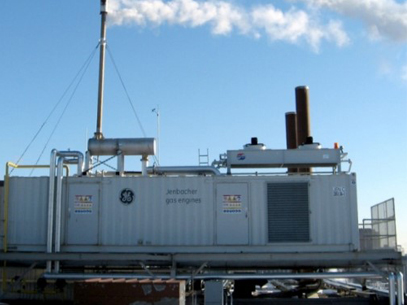
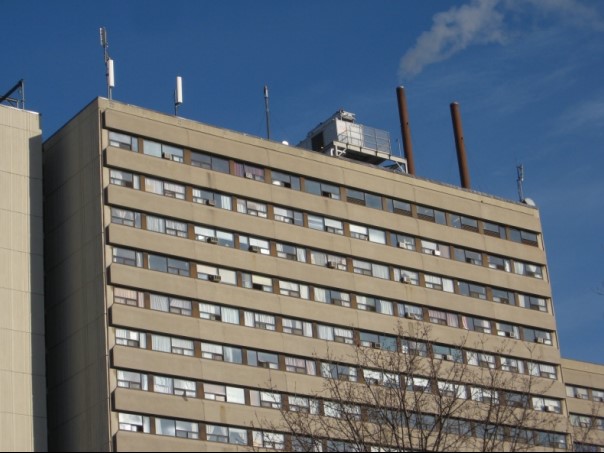
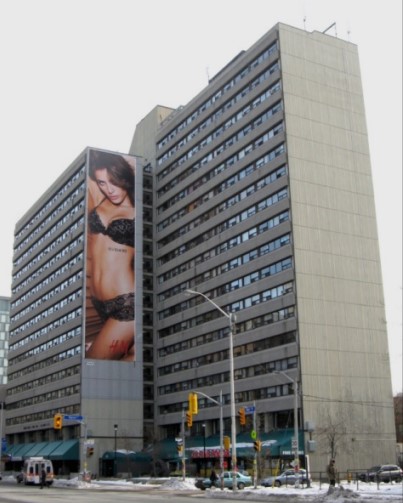
The study led to a successful turnkey proposal to deliver the “2nd of its kind in Canada” CHeP System installed in containerized package on the roof of TCHC’s 18 storey Senator D. Croll Apartments at 341 Bloor St. West, in downtown Toronto.
The project included the turnkey delivery of:
– all major and ancillary equipment,
– all detailed engineering design/drafting services (structural, mechanical/electrical & environmental),
– project and construction management/supervision,
– startup and commissioning, and
– O&M, including automated dispatch and report generation.
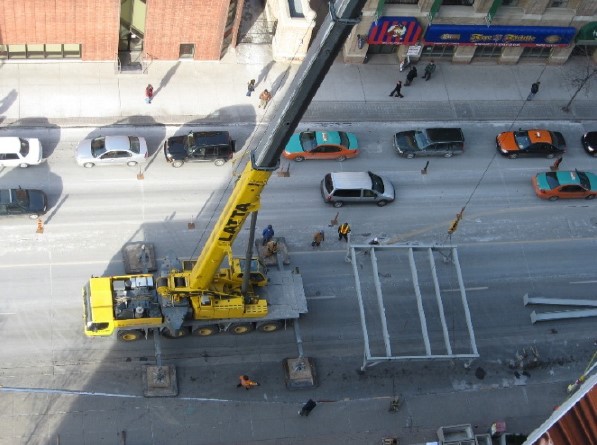
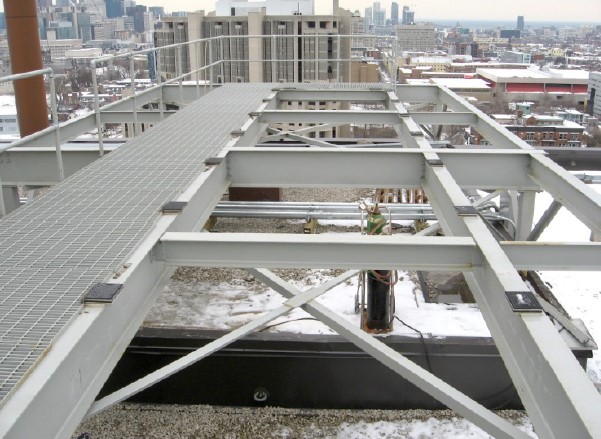
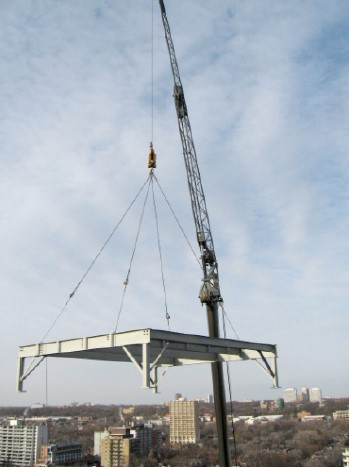
Prior to installing the CHeP system on the roof of the building a new structural steel base frame was fabricated, delivered to site, then pre-assembled on site in several large sections.
The individual sections were then erected separately by crane where they were assembled together and later bolted to the building roof structure.
The finished assembly was fitted with platforms including grating and safety railings awaiting arrival of the containerized CHeP system.
Vibration isolation pads (neoprene / steel / neoprene) were glued to the base frame.
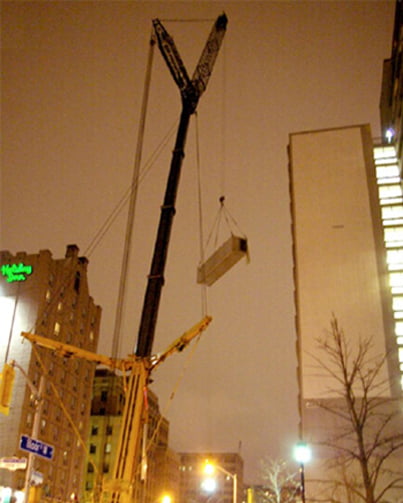
After careful planning and permitting (including the full closure of Bloor St. eastbound lanes and one westbound lane), the 40 Ton containerized CHeP was lifted to the roof and lowered onto the structural steel base frame using a 550 Ton (2nd to largest available) mobile crane.
In the months that followed mechanical and electrical contractors connected the CHeP system to the buildings existing infrastructure. Commissioning was in late 2009.
Though the system is capable of running continuously in cogeneration mode its’ main function is to serve as the buildings’ Emergency Power Supply System in accordance with the CSA-282-05 Standard. In cogeneration mode the system is dispatched using an in-house “Spot Market Automated Dispatch Algorithm” (SMADA) System.